
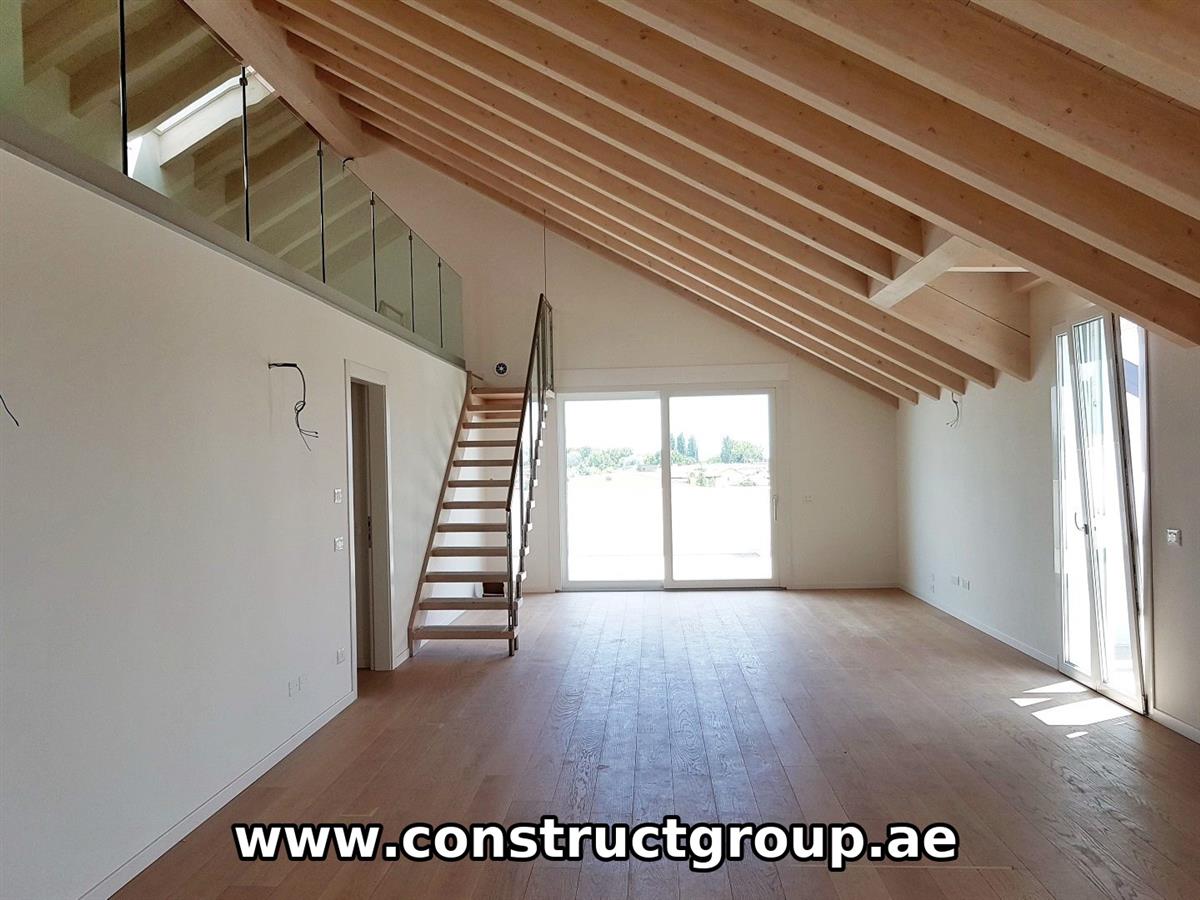
Full Renovation: What Adds Value
1) Scoping & Design (before works)
- Clear brief & constraints: purpose (rent/sell/keep), budget bands, timeline, code needs.
- Measured survey & drawings: dimensioned plans/elevations; room-by-room finish schedule; MEP points.
- Decision log & approvals: one source of truth (rev-controlled), with deadlines for tiles, doors, sanitary, lighting.
- Cost control baseline: BOQ with inclusions/exclusions; contingency +10–15% set aside.
- Value impact: eliminates scope drift → −10–20% rework vs projects without a documented scope.
2) Materials that actually increase value
- Wet areas: waterproofing system (primer + band + 2 coats) certified as a set; large-format porcelain; quality drains.
- Floors: engineered wood/LVT/porcelain suitable for traffic + UFH limits; acoustic underlays where needed.
- MEP: modern consumer-visible gear (quiet AC, smart thermostats, dimmable lighting), shut-offs, accessible valves.
- Joinery: durable hinges/runners (soft-close, corrosion-resistant), moisture-rated boards for kitchens/baths.
- Paints & sealants: low-VOC, washable paints; sanitary silicones with mould inhibitors.
- Value impact: better tenant/buyer appeal and lower callbacks → lifecycle upkeep −10–25% vs budget mixes.
3) Workmanship standards (how to install)
- Wet rooms: flood test 24h before tiling; slopes verified with levels; expansion joints at changes of plane.
- Tiling: C2/S1 adhesives where needed; layout set-out from focal lines; movement joints per perimeter.
- Floors: moisture test screeds (CM/RH) before wood/LVT; leave expansion; protect with boards until handover.
- Drywall & plaster: acoustic mineral wool in partitions; mesh at openings; SR1 flatness for feature walls.
- Electrical: labelled circuits; RCD/GFCI protection; load calc; test sheet at handover.
- Plumbing: pressure tests (cold/hot) before close-up; accessible service panels; correct falls on waste lines.
- Value impact: defects at handover −25–50% when these checks are enforced.
4) Sequencing (the order that saves time & money)
- Protection & demo → 2) MEP rough-in → 3) Substrates (renders/screeds) → 4) Waterproofing →
- Skim → 6) Tiling/stone → 7) First paint → 8) Flooring → 9) Joinery/kitchen →
- Devices/lighting → 11) Commissioning → 12) Final paint → 13) Sealing → 14) Deep clean → 15) Handover.
- Value impact: integrated sequence cuts idle time → schedule −15–30% vs ad-hoc order.
5) Site organisation & logistics
- Weekly look-ahead (2 weeks): tasks, dependencies, material arrivals, inspections.
- Zones & protection: dust control, floor protection, tool storage, waste plan (skip timings).
- Long-lead tracking: tiles, doors, lights, glass; order early, approve shop drawings.
- Access & working hours: coordinate with building management to avoid stoppages.
- Value impact: downtime −20–35%; damage to finished areas −30–60%.
6) Team structure & responsibilities
- Single project lead (one throat to choke): coordinates trades, approvals, programme, QA/QC.
- Trade leads: electrician/plumber/tiler/carpenter each with a daily checklist.
- Daily stand-up (15 min): blockers, H&S, handovers; end-of-day photo log.
- Clear authority: only the project lead accepts changes; no side agreements on site.
- Value impact: change-order volume −20–40%.
7) Communication with the client (and between firms)
- Cadence: weekly progress report (photos, % complete, next week plan, decisions needed).
- RFI/change workflow: every change documented with scope note + drawing mark-ups + time & %-cost impact; client signs digitally.
- Mock-ups & samples: approve one bathroom, one wall paint, grout colors, profile trims before rollout.
- Issue tracker: shared sheet with target dates & responsible person.
- Value impact: disputes −40–70%; client satisfaction +20–30%.
8) Quality control (checkpoints that prevent rework)
- Hold points:
- Pressure tests signed before wall closure.
- Flood test certificate before tiling.
- Screed moisture pass before wood/LVT.
- Lighting/MEP commissioning sheet before ceiling access is closed.
- Tolerances & finish: straightedge checks, lippage gauges, paint coverage, silicone continuity.
- Snagging: internal snag round, then client snag; fix list closed before handover.
- Value impact: rework −15–35%; warranty calls −10–30%.
9) Documentation that protects value
- Handover pack: warranties, product data sheets, paint codes, tile spare list, electrical single-line diagram, valve map, commissioning results, maintenance plan (cleaning & reseal cycles).
- As-built drawings: final outlet/valve/duct positions.
- Value impact: faster future works; troubleshooting time −30–50%.
10) Cost guidance (percentages only; reference = disciplined project with single coordinating firm = 0%)
- Multiple firms, owner-managed: total out-turn +5–15% (scope gaps/overlaps), schedule +15–30%, defects +25–50%.
- Skipping QC hold points: rework risk +20–60%.
- Late material decisions: programme impact +10–25%; express shipping +5–15% material uplift.
- Protecting finished floors properly: repair costs −50–80% vs unprotected sites.
Quick “Value Pack” you can standardise
- Design & scope: room-by-room schedule + drawings + finish matrix.
- Three mandatory tests: pressure, flood, screed moisture.
- Three approvals: bathroom mock-up, paint sample wall, lighting scene.
- Three documents at handover: warranties bundle, commissioning sheets, maintenance plan.
- One boss: single project lead with change-control authority.
What clients actually feel (benefits)
- On-time delivery (predictable move-in date)
- Fewer surprises (clear inclusions & approvals)
- Better comfort & durability (right materials + right install)
- Lower total cost of ownership (less rework, fewer call-backs)

